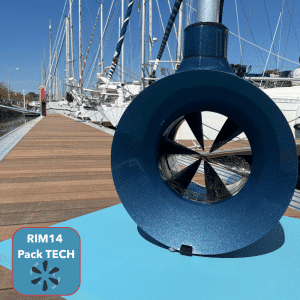
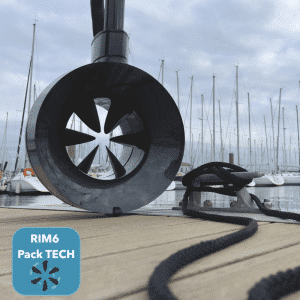
In a propulsion system, the motor provides the torque, but it is the blades that convert this mechanical energy into actual thrust.
For our RIM1.5 model, we made a specific technological choice to ensure this energy transfer: the use of stainless steel.
Find out why this material is critical to the hydrodynamic efficiency of this thruster.
Understanding the role of the blades
To explain the role of the blades, here’s a simple analogy: an engine without an efficient propeller is like pedaling with all your might on a bike whose wheel is spinning on the ground.
The energy is there, but the vehicle isn’t moving forward.
The blades capture the incoming water flow, deflect it, and accelerate it backward; this reaction generates propulsion.
If the blades are poorly designed, the risks are clear: the creation of inefficient zones, cavitation, and noise.
This can reduce overall efficiency by 20 to 40 percent.
The technical issue: Rigidity is critical
On an engine like the RIM1.5, the blades are subjected to significant stress.
Rigidity therefore becomes the critical factor.
Why?
Because a blade that lacks rigidity bends under stress.
This deformation changes the blade's angle of attack during operation.
The result is immediate: it alters the thrust and reduces performance.
Therefore, a material was needed that could limit these deformations in order to maintain perfect geometry.
The Choice of Stainless Steel for the RIM 1.5
Given the specific requirements of RIM1.5 (high loads, repeated cycles), we ruled out conventional solutions.
As our comparative study shows, stainless steel is the only material capable of meeting the specifications for these specific blades:
- Unparalleled rigidity: Stainless steel offers far greater rigidity than standard thermoplastics.
It ensures that the RIM1.5 blade’s geometry remains perfect, even under full load.
- Impact and abrasion resistance: At sea, collisions with floating debris are common.
Stainless steel absorbs impacts without sudden breakage. - Abrasion resistance: This physical phenomenon can wear down soft materials.
Stainless steel offers remarkable resistanceto this, which is essential for the longevity of the RIM1.5.
An innovative and integrated design
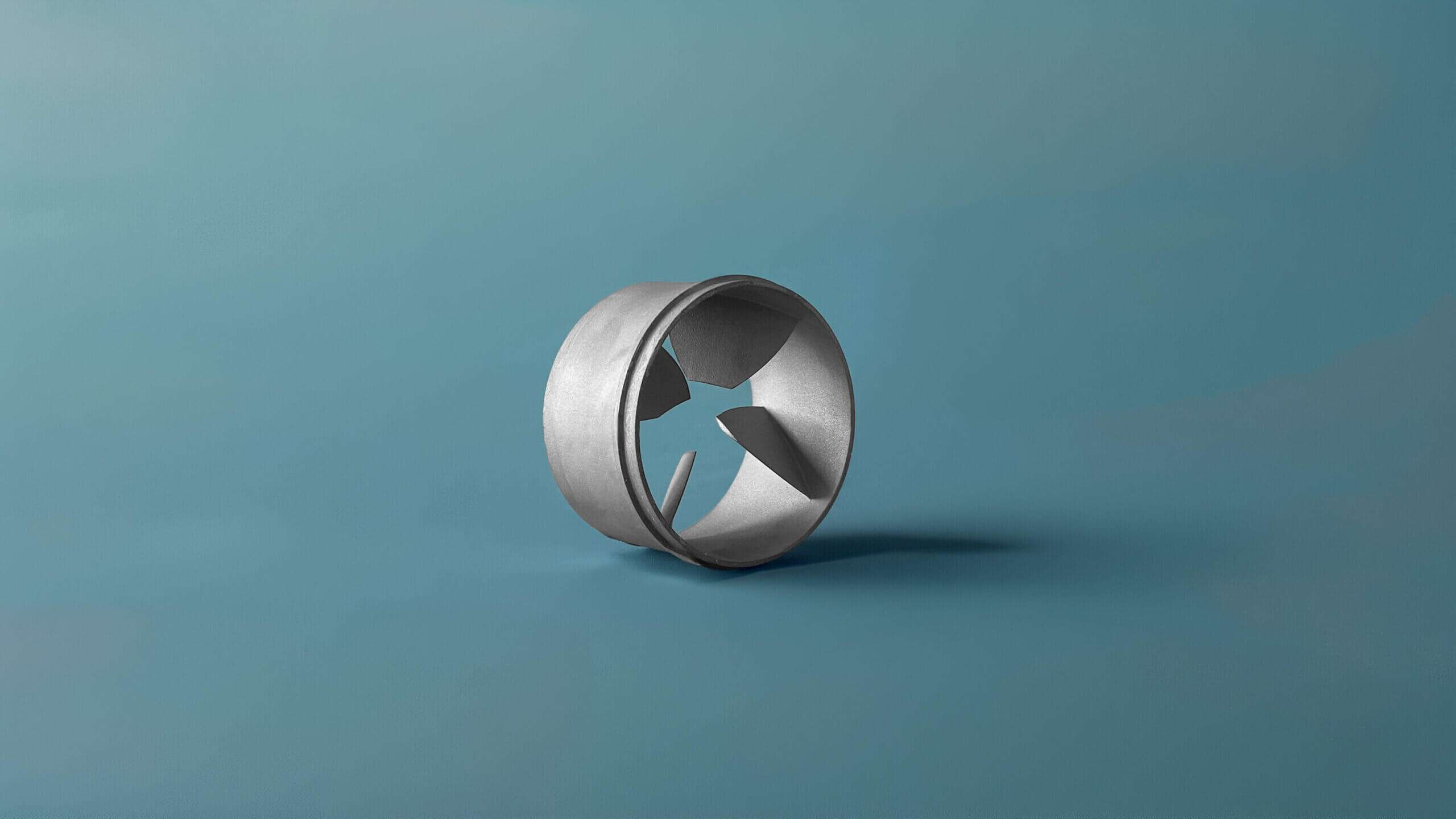
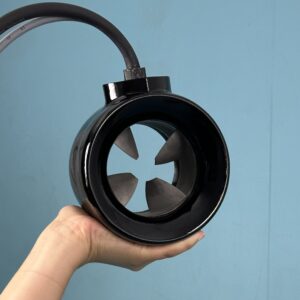
The blades of the RIM1.5 are not simply aftermarket parts.
They feature a proprietary design.
The innovation lies in the manufacturing process: on the RIM1.5, the blades and the frame form a single, unified component.
This one-piece design eliminates mechanical play and optimizes water flow.
The shape, thickness, and angle were specifically calculated for the RIM1.5’s power curve, thereby maximizing hydrodynamic gains.
Impact on performance
The use of stainless steel blades on the RIM1.5 is not just a choice driven by durability; it is a key factor in overall performance that impacts:
- Thrust: Maximized due to the absence of deformation.
- Efficiency: No energy is lost due to turbulence.
- Durability: Improved resistance to impact and erosion.
A strategic choice
The blades are the hydrodynamic heart of the system.
Poor design can render an excellent motor ineffective.
With the RIM1.5 and its stainless steel blades, the technical choice is clear:
prioritize reliability to ensure consistent performance over time.