
RIM Technology from Hy.G Motors
Displacement Power
Hy.G Motors' RIM technology harnesses the full power of a high-efficiency engine to deliver exceptional thrust.
Discover how the team at Hy.G Motors, through its technical, understated, high-performance, and efficient approach, has reimagined the very concept of marine propulsion to create a unique, streamlined vessel with superior performance: the RIM.
Superior thrust capacity
For displacement-type ships
Hy.G Motors' most powerful strategy: focusing on mobility applications.
Regardless of a ship’s tonnage, RIMs focus on the efficient use of electrical power—which is already rated for heavy loads—and enhance this through meticulous design.
Travel speeds depend on the hull design and generally range from 5 to 10 knots.
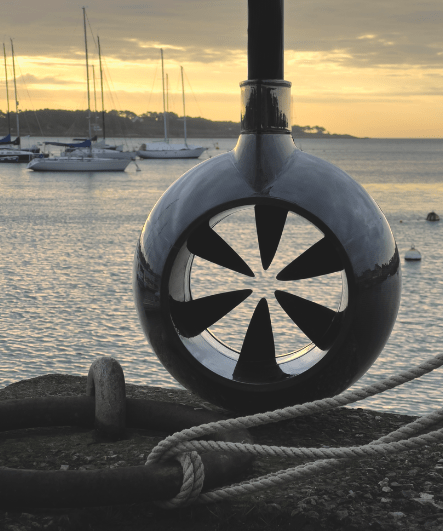
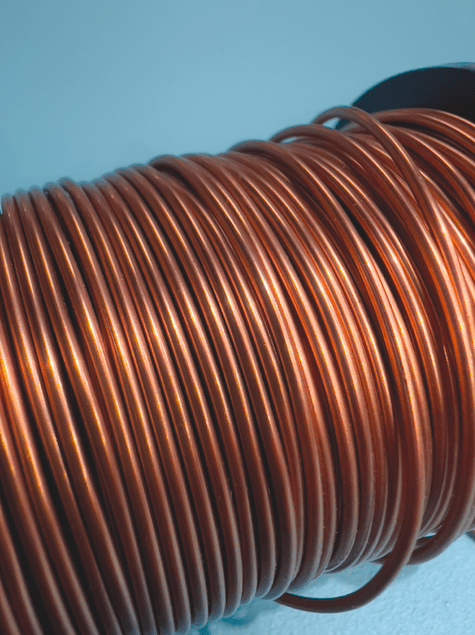
A direct-drive motor
For maximum torque
Conçu spécifiquement pour chaque modèle, il répond exactement au besoin de son hélice intérieure, retirant le tracas du choix d’hélice des propulseurs conventionnels.
Le couplage sans transmission « direct-drive » nous affranchit de tout besoin d’engrenage, améliorant le rendement et la robustesse.
Large diameter
Maximum torque
Neodymium Permanent Magnets
Super-Powerful
Encapsulated rotor and stator
Rugged Sealing - Joint-Free
Submerged
Passive cooling
A powerhouse of technology
And hydrodynamic innovations
Le carbone Haute Résistance permet d’encaisser les efforts phénoménaux produits par le RIM.
Streamlined fuselage
Excess Propulsive Power
Exterior Fairing
Personal Safety
Barrier-free access
Optimal Water Flow
No propeller mount
Reduction in blockages
An Unparalleled Browsing Experience
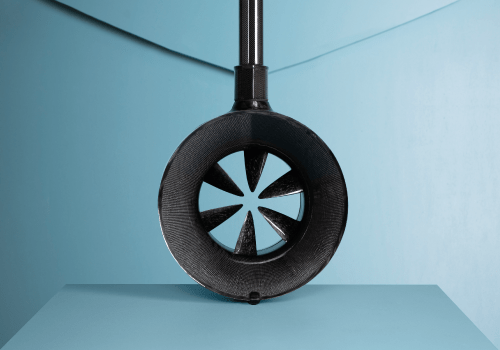
Hy.G Motors' RIMs offer great mounting flexibility. They come with a mast and joints that allow for depth adjustment and 360° rotation, providing surprising maneuverability.
The assembly is lightweight, which helps avoid overloading the rear of the boat—an area that is generally less supported by the hull—and makes it easy to handle.
RIMs deliver their full power in a matter of tenths of a second, enabling ultra-dynamic acceleration.
RIM Performance by the Numbers
To illustrate the superiority of Hy.G Motors' RIMs, here is a comparison of a RIM6 model with a model from the electric competition and with a combustion-engine model.
Hy.G Motors' RIMs are 30% more efficient than standard models.
To achieve performance comparable to that of the RIM6, one would therefore need to use a conventional model with a 10.7 kW electric motor or a 10 Cv inboard combustion engine dedicated to propulsion. Compared to an outboard motor, which is less suited for propulsion, 15 Cv would be required to replace the RIM6.
Since power consumption would be that much higher, the battery system would also become extremely heavy and expensive.
Performance Evaluation in Electric Vehicles
The assessment of propulsion power must take into account a multitude of efficiency factors, which can sometimes make it difficult to understand. Electric vehicle manufacturers have, at times, taken advantage of this lack of transparency to conceal inconvenient details.
It can be difficult to understand power in practical terms because, contrary to what is often shown in tables, efficiency values are not fixed but variable. They change depending on operating conditions (speed, RPM, power, temperature, supply voltage, etc.).
Here is a brief, simple summary of the main power ratings and efficiencies studied in propulsion:
| PUISSANCE ABSORBÉE |
PUISSANCE ARBRE |
PUISSANCE DISPONIBLE |
PUISSANCE UTILE |
|||
|---|---|---|---|---|---|---|
|
La puissance entrante dans le groupe moteur,
égale à la puissance sortante du réservoir (aux pertes de charges près)
|
← →
Rendement moteur |
La puissance mécanique à la sortie du groupe moteur (moteur + réducteur) :
Vitesse de rotation x Couple de l'arbre
|
← →
Rendement hydro
Performance
« hélice » |
La puissance hydrodynamique, transmise à l'eau
Débit x Pression à la sortie du propulseur
|
← →
Rendement propulsif
Performance bateau ,
« carène » |
La puissance utilisée par le bateau
Vitesse x Force de résistance
|